


Naughty Random Live Video Chat
4.1372.00 Reviews
App Specs
- Version
- 60.0.18
- Updated On
- License
- Free
- Downloads
- 100,000+
- Developer
- Leading Edways Ltd
- Categories
- Social
- Platform
- Android
Screenshots

 Analysis by AppCompare
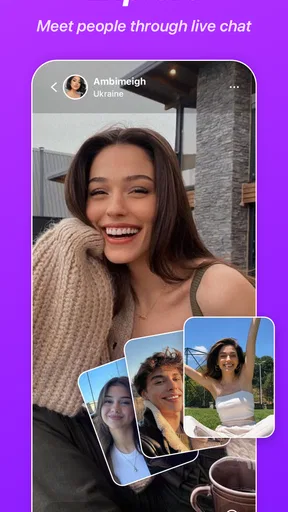
I approached Naughty Random Live Video Chat as a social app for people who want quick conversations with strangers through text, voice, and video. That focus makes it very different from a messaging app built around people you already know. The appeal is spontaneity: you open the app, meet someone new, and decide almost immediately whether the exchange is worth continuing.
My first impression is that this is an app you should use with clear boundaries rather than automatic trust. Its mature audience positioning matters, especially because live communication can become personal very quickly. I would not install it expecting a carefully moderated community or the predictable privacy model of a private messenger. I would install it only when I was comfortable making deliberate choices about what I reveal, whom I engage with, and when I leave.
How the live-chat experience feels in everyday use
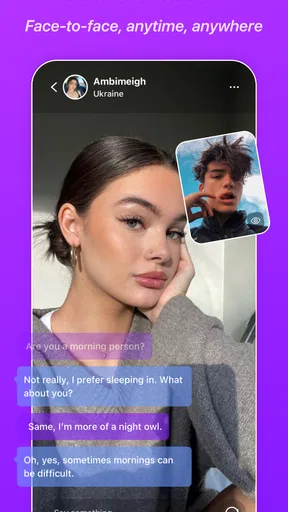
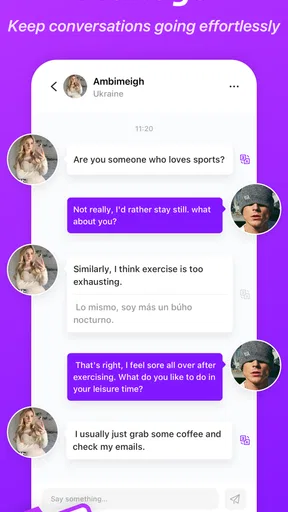
The basic idea is easy to understand. Text is useful when I want a lower-pressure introduction, while voice and video make a conversation feel more immediate. That choice between communication styles is one of the app’s practical strengths. I can begin cautiously with messages, move to voice if the exchange feels comfortable, or use video when I genuinely want a more direct interaction.
A realistic use case would be an evening when I want casual conversation without adding another contact to my regular social circle. I might start with short text messages, avoid sharing personal details, and end the exchange if the other person becomes pushy. That workflow is more sensible than treating every match as a potential friendship. The app is best approached as a stream of brief encounters, with longer connections earned through consistent, respectful behavior.
It also suits people who enjoy the uncertainty of meeting strangers. If you prefer a fixed group of friends, topic-based communities, or a platform where profiles provide extensive context before contact, the random format may feel thin. The short description, “Naughty Random,” makes the adult-oriented tone clear, so I would not recommend it to anyone looking for a general-purpose family social network.
Compared with ordinary text messengers, the main difference is that the conversation begins with discovery rather than an existing relationship. Compared with large social networks, there is less emphasis on a public identity and more on the immediate interaction. Compared with traditional video-calling tools, it is designed around meeting people rather than calling selected contacts. Those differences are useful, but they also remove some of the reassurance that comes from knowing who is on the other side.
The app is free to install, which lowers the barrier to trying it. There are in-app purchases ranging from $1.99 to $144.99 per item, so I would check every purchase screen carefully before confirming anything. A free entry point does not mean every part of the experience will necessarily remain free. I would also avoid buying anything until I understood exactly what it changes and whether I was using the service often enough to justify the cost.
Worth Reading Before You Choose

EA SPORTS FC Mobile 26 Is a Bigger Football Game, but It Takes Time

Flipboard Shows What News Apps Must Do Beyond the Feed

Switching to Android Auto Means Rethinking Your Driving Routine

Google Calendar Makes a Crowded Week Easier to Manage

Ludo King Makes the Most of the Minutes Between Plans

Baby Panda World Brings Quick Play to Modern Phones, but Its Game Library Feels Busy
Leading Edways Ltd is listed as the developer, and the app has reached over 100 thousand installs. Its average rating is 4.1 from around 1.9 thousand ratings, with 372 written reviews. Those figures suggest that the app has attracted a meaningful audience, but they should not replace my own judgment about privacy, conversation quality, or comfort. A popular social app can still be a poor fit for an individual user.
Starting with the least exposed communication mode
My preferred way to test a random chat service is to begin with text. It gives me time to notice whether a person respects ordinary boundaries, answers naturally, and accepts a change of subject. Voice can reveal more personality, but it also makes the interaction feel more intimate. Video adds another layer of exposure because my face, surroundings, and immediate environment may become visible.
This gradual approach is more than a comfort preference. It creates a simple decision point at each stage. If someone pressures me to turn on the camera, asks for identifying information, or reacts badly when I say no, I already have enough information to end the conversation. I do not need to justify leaving, and I would not treat persistence as a sign of genuine interest.
A useful habit is to prepare the room before using video. I would check what appears behind me, remove visible documents or personal items, and avoid showing a workplace, school setting, street sign, or anything that reveals where I live. Even when an app provides live communication, I remain responsible for the context I place in front of the camera.
I would also keep conversations inside the app at first. Moving immediately to another messenger, exchanging phone numbers, or sharing social profiles can make it harder to separate a casual encounter from my real-world identity. If a conversation becomes worthwhile, I can make that decision later. There is no advantage in giving away permanent contact information during the first few minutes.
Trust depends on choices I can actually verify
With a social app like this, trust should come from visible controls and my own behavior, not from assumptions. Before using it regularly, I would inspect the permission prompts presented by my device and grant only what is needed for the communication mode I choose. Text does not require the same level of access as voice or video, so I would be especially careful not to approve broad access automatically.
I would pay attention to account settings, conversation controls, and any visible options for ending an interaction or reporting conduct. The important question is not whether a platform feels friendly during the first session; it is whether I can quickly stop contact when something feels wrong. A control that is easy to find is more useful than a reassuring sentence that I cannot act on.
I would also review notifications. A social app can become intrusive if alerts appear on a shared lock screen or interrupt work throughout the day. Turning off previews, limiting notification categories, or using the phone’s system-level controls can reduce accidental exposure. This is particularly important when conversations may be mature in tone and the device is used around family, colleagues, or classmates.
Account recovery deserves similar attention. When I create an account, I would use a password that is not reused elsewhere and would avoid putting unnecessary personal information into a profile. If the app offers a profile field, I would treat it as public to other users unless the screen clearly indicates otherwise. A nickname can be useful, but it should not be combined with a workplace, neighborhood, school, or easily searchable username.
The app supports communication by text, voice, and video, but those modes carry different privacy consequences. Text can still be copied or captured. Voice can expose accent, background sounds, and names spoken nearby. Video can reveal appearance, location clues, and household details. I would choose the least revealing format that still gives me the experience I want.
Where data sensitivity becomes practical
Live conversation encourages people to respond quickly, and that is exactly when I am most likely to overshare. I would avoid discussing financial information, login codes, travel plans, home addresses, private workplace details, or anything that could be used to identify or pressure me. I would also be cautious about sending images, because a moment that feels temporary can still be saved by another person.
One subtle risk is the accumulation of harmless details. A first name may seem unimportant, and a city may seem broad enough, but together with a job, daily routine, and recognizable background they can create a surprisingly clear picture. I would keep early conversations general and watch for repeated questions that seem designed to assemble that picture.
Another sensitive moment comes when a stranger tries to move the conversation into a more private setting. The request may sound flattering or urgent, but urgency is not a reason to surrender control. I would ask myself whether the person respects a simple delay. Someone who accepts “not yet” is giving me useful evidence; someone who becomes hostile is giving me an even clearer reason to leave.
I would be careful with payment prompts as well. Since the app includes purchases, I would read the wording on each screen rather than assuming that a button means a one-time action. I would use the purchase protections on my Android or iOS device, keep confirmation requirements enabled, and review receipts. This is ordinary digital hygiene, but it matters more in a social setting where emotional momentum can encourage impulsive spending.
The mature 17+ rating is another reason to keep the app away from children and younger teenagers. I would not interpret that label as a guarantee that every interaction will be respectful or suitable for every adult. It is a signal to use the app with adult judgment, especially when conversations become sexual, manipulative, or otherwise uncomfortable.
Keeping control when a conversation changes direction
My strongest advice is to decide in advance what would make me leave. Examples include repeated requests for personal information, pressure to show my face, insults after a refusal, requests for money, threats, or attempts to make me keep the conversation secret. Having those rules ready prevents me from negotiating with someone who is already ignoring my boundaries.
I would use the app’s visible conversation controls whenever they are available, and I would also rely on the phone’s system tools if I needed to restrict notifications or access. If a person behaves badly, I would not continue talking just to collect evidence or win an argument. I would preserve only the information needed for a report where appropriate, then block or exit rather than prolonging contact.
There is a trade-off here. Random social apps can feel more open because users do not need an established network, but that openness means I have to perform more of the filtering myself. A platform centered on known contacts may be less exciting yet easier to trust. A moderated interest community may be better for finding people who share a hobby, because the topic gives the conversation a natural starting point and a reason to stay respectful.
I would also think about time limits. A short session keeps the experience casual and makes it easier to avoid emotional dependence on one stranger. If I notice myself checking repeatedly for attention, spending more than planned, or staying in conversations that make me uneasy, I would take a break. The app should fit into my routine, not dictate my mood.
For someone using an older phone, compatibility is relatively broad: the current version, 60.0.18, requires Android 8.0 or later. That makes it accessible to many Android users, although the quality of voice and video will still depend on the device, camera, microphone, connection, and surrounding noise. I would test those basics privately before joining a live conversation, rather than discovering a technical problem while speaking with a stranger.
Who will enjoy it, and who should choose something else
I can recommend this app to adults who specifically want spontaneous text, voice, and video conversations and who are comfortable managing their own boundaries. It is a reasonable fit for someone who enjoys brief social encounters, does not need a carefully built profile system, and can treat random contact as entertainment rather than instant intimacy.
I would not recommend it to a person seeking dependable professional networking, structured dating, close-knit interest groups, or private communication with known friends. A standard messenger is better for people I already trust. A community platform is better when I want discussions organized around a topic. A conventional video-call app is better when I already know exactly whom I want to contact.
I would also advise skipping it if unexpected adult conversations are likely to cause distress, or if the user is under the stated age threshold. The mature positioning is not a minor detail. Anyone sharing a phone with family members should also review notification previews and account access before using it, because live social interactions can be more revealing than ordinary app alerts.
My practical test would be simple: install it only if the communication format itself interests me, start with text, keep identifying details out of the first conversations, and inspect every permission and purchase prompt. If the first sessions feel respectful and manageable, voice or video can be explored gradually. If the experience depends on pressure, secrecy, or spending more than expected, I would stop using it rather than trying to force a good outcome.
Overall, Naughty Random Live Video Chat is most convincing as a controlled doorway to casual stranger conversations, not as a replacement for every other social tool. I like the flexibility between text, voice, and video, and I appreciate that the free installation makes a cautious trial possible. At the same time, the random format demands active judgment from me at every stage.
The best way to use it is to treat access as temporary, personal information as valuable, and leaving as a normal option. With that mindset, it can offer spontaneous interaction without requiring me to expose more than I intend. Without that mindset, the same openness that makes the app interesting can quickly become its biggest weakness.
Pros
- Quick way to meet new people through live video conversations.
- Simple interface makes starting a chat easy for first-time users.
- Random matching can create varied and unexpected conversations.
- Video interaction feels more personal than text-only messaging.
- Useful for casual socializing without needing an established friend group.
Cons
- Random chats may include inappropriate or uncomfortable behavior.
- User quality and availability can vary greatly by time and location.
- Privacy risks exist when sharing your face or personal information.
- Some features may require purchases or in-app credits.
- The experience can become repetitive after frequent random matches.
FAQs for Naughty Random Live Video Chat
What is Naughty Random Live Video Chat, and how does it work?
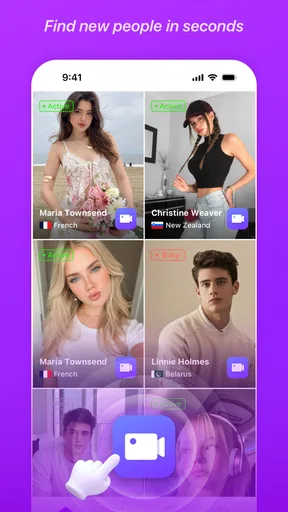
Naughty Random Live Video Chat is a social video-chat application designed to connect users with strangers for live conversations. After creating or entering a profile, you can browse available users and start a random video or text interaction, depending on the features offered in your region. The experience is spontaneous, so matches, conversation quality, and available users can change frequently.
Is Naughty Random Live Video Chat free to download and use?
The application may be free to download, but some functions can require in-app purchases, credits, subscriptions, or other paid features. Video calls, premium matching options, virtual gifts, or extended chat time may not be included in the basic experience. Before using paid tools, check the current pricing, renewal terms, and payment settings shown in the app store and inside the application.
Is Naughty Random Live Video Chat safe for meeting strangers online?
As with any random video-chat platform, users should be careful when interacting with people they do not know. Avoid sharing your address, phone number, passwords, financial details, or private images. Use the report and block tools if someone behaves abusively or requests inappropriate content. Parents should also be aware that random live-chat services may not be suitable for children or younger teenagers.
Does the app require a camera, microphone, or personal information?
Video conversations normally require access to your device’s camera and microphone, while text chat may work without enabling the camera. The app can also request information such as an account name, age, profile details, or login credentials. Review the permission requests carefully and only grant access that is necessary for the features you intend to use. Privacy settings should be checked before starting a conversation.
What should I do if I encounter inappropriate behavior or want to stop using the service?
If another user sends offensive messages, displays inappropriate material, pressures you to share personal information, or behaves threateningly, end the conversation immediately and use the in-app block and report options. Do not continue arguing or move the conversation to another platform. If you decide to stop using the service, remove personal profile details, cancel any active subscription through your app store, and uninstall the application.


